African Life Sciences: Can AI and Precision Medicine Power its Growth?
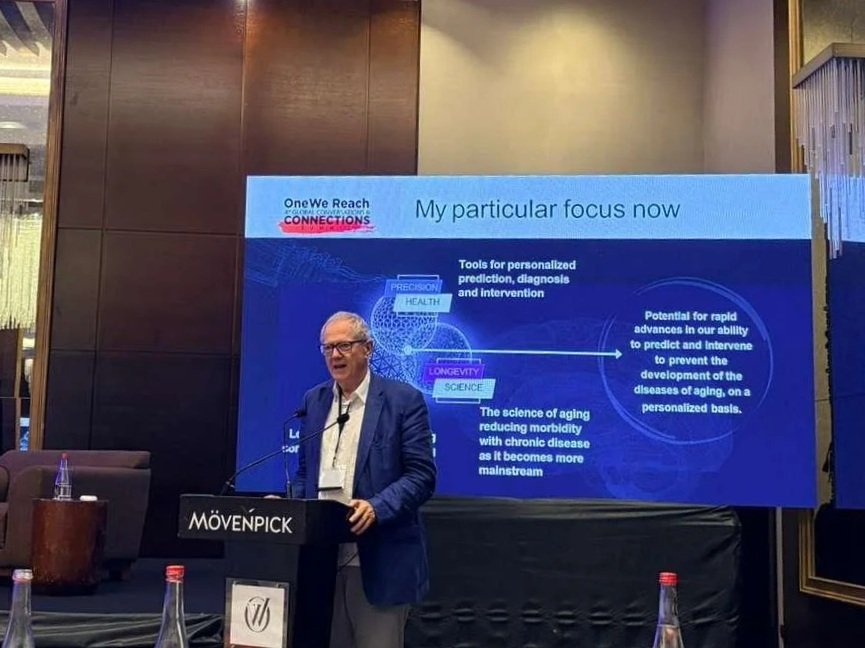
Image: Richard Barker
In the course of preparing for a recent conference in Accra in Ghana, I made an observation that surprised me: there are no long-term forecasts for the growth of the life sciences sector across Africa. For a continent undergoing such dramatic demographic and economic transformation, that gap is striking — and worth examining.
The standard explanations for scepticism about Africa’s future are familiar. Aid funding is being cut — especially from the United States, historically the largest source. Government healthcare budgets, several currently under 5% of GDP, are not expected to rise to developed country levels of 10% and above for some time. South Africa and Egypt are exceptions, but they are outliers. The historical funding picture, taken alone, does not inspire confidence. And – in contrast to the USA and EU – the continent remains very fragmented politically, and that too is unlikely to change fast.
And yet, the broader economic picture is changing rapidly. Across the continent, populations are surging, lifespans are extending, and a middle class numbering around 500 million by 2030 is emerging alongside a young workforce of 1.1 billion. Poor access to healthcare and endemic infectious disease — HIV/AIDS, malaria, TB — have historically kept average lifespan in Africa a couple of decades below much of the rest of the world. But the trajectory is shifting, and non-communicable diseases (NCDs) are expected to overtake infections as the main drivers of morbidity and mortality quite soon, and these are the targets around which the biopharmaceutical industry has flourished elsewhere.
So, if current funding limitations define the future, we need to remember we could have been equally sceptical about China and India 20–25 years ago. Instead, both have become major forces in healthcare innovations and product manufacturing and sales, with private spending a significant driver. Private health insurance is increasing and may prove the dominant source of funding, at least until governments begin to reap the tax benefits of greater national economic activity.
At the conference in Ghana, I saw evidence of strong indigenous leadership in precision medicine, AI-powered telemedicine and manufacturing. The local manufacturing base is currently focused on generics and biosimilars, but India’s trajectory — from generics to sophisticated innovation — offers a credible model. And there are many African professionals trained in the US and Europe who are eager to return, much as we have seen in China. Also, the AI revolution can and will streamline the whole value chain for all participants, and telemedicine can project knowledge and expertise from sophisticated centres to rural settings.
The elephant in the room — to make a pun — is that Africa is divided into 50+ countries that are typically not used to working together. The United States of Africa is a long way away. But cross-continent collaboration is growing. A good example is the African Medicines Agency, just getting off the ground, with the goal of simplifying and streamlining the review and approval of trials and products across the continent. The new AMA head spoke at the same meeting very optimistically about a more unified future. In Europe, we know that harmonising product assessment — from both a regulatory and HTA perspective — is essential to avoid the fragmentation of 27 separate national processes that increases both costs and time-to-use. Africa is beginning to learn the same lesson.
In terms of international partnerships, the coming years will be telling. Will Africa become a welcoming market for US innovation, or will China — already a significant partner in African agriculture and infrastructure — prove the more effective ally in life sciences?
I left Accra encouraged — in large measure because of the energy and determination of the leaders gathered there. Yes, artificial Intelligence may prove one of the forces that helps Africa leapfrog the legacy systems and vested interests that constrain more developed markets. But at the end of the day, it will be the quality of human vision and leadership that secures a strong future for African life sciences. That, at least, was abundantly present in Ghana.